

Are you one of those night owls who happen to have a sweet tooth and also love indulgent stuff post-midnight?
If you just found yourself in that statement, girl, this article is made just for you!
Because we are discussing the Basque Cheesecake Recipe!
Basque cheesecake is different. It is not your average cheesecake.
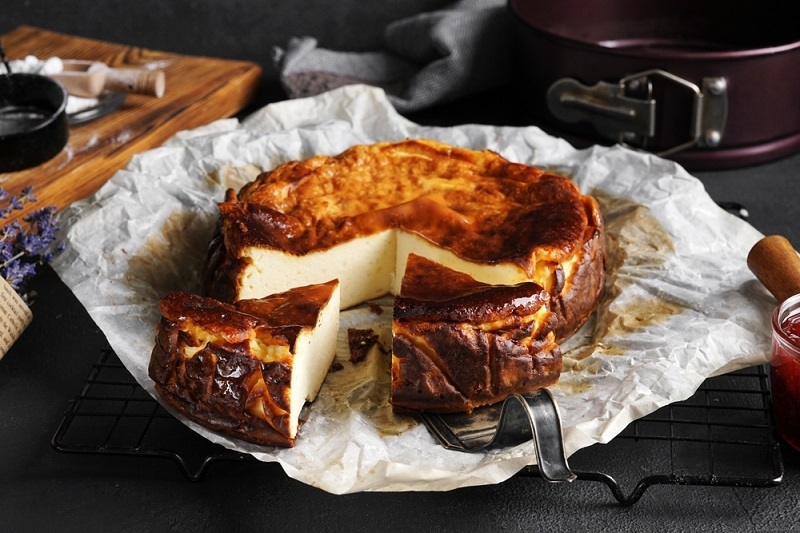
It’s rustic, deeply caramelized on top, and irresistibly creamy in the center. I know you are salivating already!
You will never know this feeling if you’ve never tried a Basque cheesecake recipe before. You’re in for a dessert ride that breaks all the traditional cheesecake rules, in the best way possible.
Unlike classic New York–style cheesecakes, Basque cheesecake embraces cracks, dark edges, and a jiggly center. Even though Basque cheesecake originated in Spain, it has now become a quick global sensation recipe for its bold flavor and effortless elegance.
Come on, let’s walk through everything you need to know, from ingredients to baking secrets.
Basque cheesecake is a beautiful, crustless, caramelized, and burnt cheesecake from San Sebastián, Spain. It is known for its rustic, darkly browned exterior and incredibly creamy, custardy interior. Basque cheesecake is baked at a high temperature for a short time. And it doesn't involve the traditional water bath, resulting in a light, almost soufflé-like texture. Basque cheesecake is often called a burnt cheesecake for its crustless cheesecake baking procedure at high heat to achieve a deeply caramelized exterior with luxurious creamy stuff inside.
Unlike traditional cheesecakes that require water baths and precise temperature control, this one is intentionally baked until the top turns dark brown. The contrast between the smoky caramel notes and the rich cream cheese filling is what makes it unforgettable. Its simplicity is part of its charm, with no crust, no complicated techniques, just bold flavor and texture.
Basque cheesecake has a special story of its origin. It comes from the Basque region of Spain, specifically from the restaurant La Viña in San Sebastián. Chef Santiago Rivera created it in the 1990s, and it quickly became a signature dish.
Unlike carefully structured French or American cheesecakes, Basque cheesecake was intentionally rustic to give it that decadent flavor. The parchment-lined pan, cracked top, and burnt finish became its defining features. It was from that time that Basque cheesecake traveled from Spain and spread across Europe, then to the U.S. and Asia, becoming a viral bakery favorite. Today, it’s celebrated for its simplicity and bold flavor profile. It is always beter know the origin of your favorite food. Just like Basque cheesecake.
To make any recipe taste better, it is essential to have a good and complete ingredient list. It is what makes the recipe taste so much better than a regular recipe. High-quality cream cheese is crucial for Basque cheesecake. Since there’s no crust or toppings to hide behind, every ingredient shines through. The beauty of this recipe lies in its simplicity. So, here is a brief list of the Basque cheesecake ingredients that you will need, and some of them might already be sitting on your kitchen counter:
Basque cheesecake is the easiest cheesecake ever: creamy and sweet with a burnished burnt top that contrasts with the inside. Here is your simple guide to making the perfect Basque cheesecake:
Preheat your oven to 400°F (200°C). Line a 9-inch springform pan with two large sheets of parchment paper. Letting the paper extend above the rim gives the cheesecake its signature rustic look.
Take a large bowl and beat the cream cheese and sugar until completely smooth and creamy. Make sure there are no lumps in the batter. Now, add the eggs one at a time, mixing well after each addition. Pour in the heavy cream and vanilla extract. Mix until they all combine. Sift in the flour and add salt. Fold gently until smooth. And don’t overmix the batter.
Now, pour the prepared batter into the prepared pan. And bake for an hour. The top of the Basque cheesecake should be deeply golden brown and almost dark brown. Don’t panic if you see a blackish-burnt top, because that's exactly how we want it to be. And the center should still be jiggle-wiggly soft when shaken.
At last, let the cheesecake cool at room temperature. Then refrigerate for at least 4 hours, preferably overnight. It will help the Basque cheesecake set while keeping the center creamy and gooey. Finally, slice a large piece with a warm knife for clean cuts and enjoy!
Now that you know the process, here are some pro tips to elevate your Basque Cheesecake Recipe:
Food is subjective. Everybody has different tastes and flavor palates, and just like any other recipe, the Basque cheesecake recipe can also be fused with different cuisines or ingredients for a better taste. But ensure you add minimal ingredients to preserve the creamy structure. While the classic version is perfect on its own, you can experiment with flavors like
Try This: Seasonal Flavors Guide on What to Cook Throughout the Year
Basque cheesecake can be eaten in any way for its flavors, but it tastes 10 times better when chilled or at cool room temperature. You don’t need any toppings; just add fresh berries or a light dusting of powdered sugar to enhance the presentation. Pair it with coffee, dessert wine, or even a glass of sherry for an authentic Spanish touch.
In this guide, we explored the Basque Cheesecake Recipe, from its Spanish origin to ingredients, step-by-step baking instructions, and expert tips. Now it’s your turn to bake this creamy, caramelized masterpiece. Try it today and impress everyone with minimal effort and maximum flavor! I know your peers are going to love it!
Baked cheesecake has gained popularity mostly for three basic factors, including simplicity, bold flavor, and visual appeal. It’s forgiving compared to traditional cheesecakes. Basque cheesecake looks artisanal and impressive, with an incredible taste. The creamy center is balanced by the caramelized top, creating a dessert experience that feels both rustic and refined on the palate.
Preserving a loved recipe is the real challenge, but for Basque cheesecake, it is pretty easy. Store the leftover Basque cheesecake recipe in an airtight container in the refrigerator for up to five days. If you wish to continue eating them for longer, you can also freeze slices individually. Wrap it up tightly in plastic wrap and store it in a freezer-safe container for up to two months.
Yes, you can omit flour for a gluten-free version. The texture becomes slightly softer and more custard-like, but it still sets beautifully when chilled properly.
Cracks are normal in this style of cheesecake. Excessive cracking may happen if it’s overbaked or cooled too quickly. Always let it cool gradually at room temperature
It’s done when the top is dark brown and the center jiggles slightly when shaken. The residual heat will continue cooking it as it cools.
This content was created by AI