

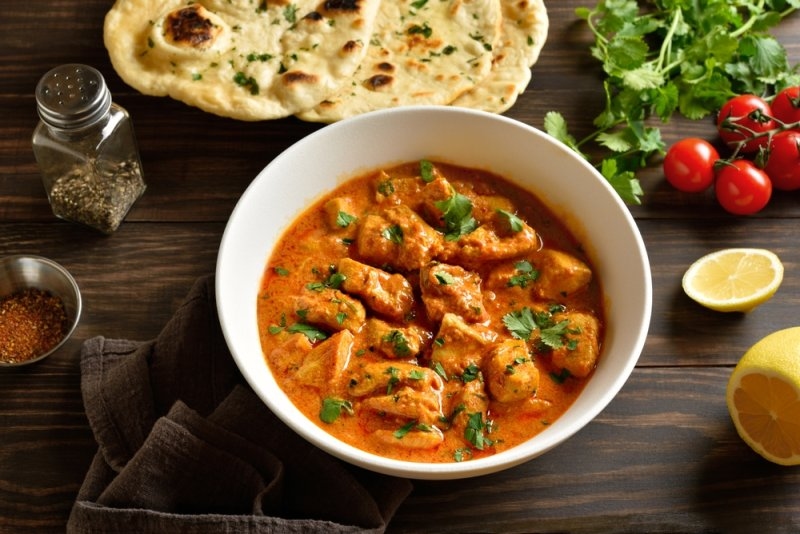
At its heart, chicken tikka masala is built on two things: well-marinated, flavourful chicken and a sauce with enough spice, tomato, and cream to pull it all together. Without that initial char before mixing with the sauce, you’re missing the point.
This version fits into a home kitchen without sacrificing that restaurant-style smoke or depth. It’s perfectly paired with rice, naan, or simple roti. The dish is rich, but never overly heavy.
Here, you’ll find everything needed—ingredients, step-by-step instructions, and tips on picking your spices, all laid out for home cooks.
The method separates chicken cooking from sauce-making, which prevents the meat from turning soft and bland.
Chicken tikka masala needs a strong marinade because boneless chicken can dry quickly. Yoghurt coats the pieces, while ginger, garlic, chilli, and spices add flavour before cooking. For an easy chicken tikka masala, cut the chicken into medium pieces so they cook quickly without losing moisture.
The usual spice base includes cumin, coriander, turmeric, garam masala, Kashmiri chilli, and black pepper. This combination creates the familiar Indian chicken curry flavour without making the sauce aggressively hot. Garam masala should be added toward the end too; its aroma is easily lost during long cooking.
Must Read: Quick Global Dinner Recipes for Flavorful Weeknights
The ingredient list is simple, but the order of use matters more than having a huge spice collection.
Cooking the chicken separately gives this authentic chicken tikka masala a better roasted edge and keeps the gravy from tasting boiled.
Learn More Here: Chipotle Chicken Recipe That Tastes Smoky and Easy to Make
The difference is mostly technique, not secret ingredients. Restaurant-style chicken tikka masala usually gets more char, stronger heat, and a smoother, richer sauce.
| Feature | Home Version | Restaurant Style |
|---|---|---|
| Chicken | Pan-cooked | Stronger char |
| Sauce | Moderate cream | Usually richer |
| Heat | Adjustable | Often higher |
| Texture | Rustic | Smoother |
| Cooking fat | Moderate | Often more generous |
For a restaurant-style chicken tikka masala recipe, use a very hot cast-iron pan and avoid overcrowding. If available, grill the marinated chicken before adding it to the sauce. This produces a better smoky edge.
A tandoor is useful, but it is not required for a convincing result at home. Use a heavy skillet, grill pan, or oven broiler. The important part is intense direct heat. Spread chicken pieces apart, let them brown undisturbed, then turn them. A crowded pan releases water and steams the chicken instead.
For creamy chicken tikka masala, add cream only after the tomato base has cooked properly. Too much cream can flatten the spices. Around half a cup is enough for this quantity.
Chicken tikka masala is related to Indian chicken curry but is prepared differently. The chicken is traditionally marinated and cooked separately before being combined with a tomato-based sauce. Indian chicken curry can use raw chicken directly in the gravy and often has a different spice structure.
This homemade chicken tikka masala tastes best immediately after cooking, when the chicken still has some char, and the sauce is glossy. Serve it with basmati rice, jeera rice, naan, roti, or a simple cucumber salad. For leftovers, refrigerate in a covered container and use within three days. Reheat gently; high heat can make the cream split.
A useful example: if the sauce thickens overnight, add one or two tablespoons of water while reheating rather than adding extra cream.
Small mistakes can make chicken tikka masala taste flat even when the ingredient list is correct.
Also Read: Huli Huli Chicken Recipe – Authentic Hawaiian Grilled BBQ
With this method, the recipe stays simple: marinate your chicken, brown it well, simmer your tomatoes, and hold back on the cream until the end. You get flexibility too—make a quick version on a weeknight, or go all the way for a deeper, more intense flavour when you have the time.
If you do just three things, do these: keep your pan hot, let your sauce cook down slowly, and finish with cream. That’s what turns it into a real dinner, not just any curry.
Yes, you can, but make sure it’s completely defrosted first. After it’s thawed, dry it off before adding any marinade. Too much moisture stops it from browning the way you want.
Yes. Use Kashmiri chilli powder sparingly, and steer clear of spicier chillies—they can easily overwhelm the dish. Garam masala need not be removed, as it primarily serves to impart fragrance.
If your sauce tastes unusually sweet, blame extra sugar, heavy cream, or those super-sweet tomatoes. Add salt gradually and balance the sauce with a small amount of lemon juice.
Absolutely. Just keep in mind, coconut milk gives the sauce a gentler, softer flavour and a touch of sweetness. It changes the overall taste, but in a good way if you like coconut.
Honestly, you can't go wrong with plain basmati rice. The sauce really shines against that simple background. If you want to mix things up, try jeera rice (cumin rice). It's aromatic and flavourful but doesn’t make the meal too heavy.
This content was created by AI